Unraveling Data Synchronization Patterns Between Game Engines and User Progression Trackers in Emerging Digital Betting Platforms
Written by Ulrich Powell · Jun 28, 2026
Unraveling Data Synchronization Patterns Between Game Engines and User Progression Trackers in Emerging Digital Betting Platforms
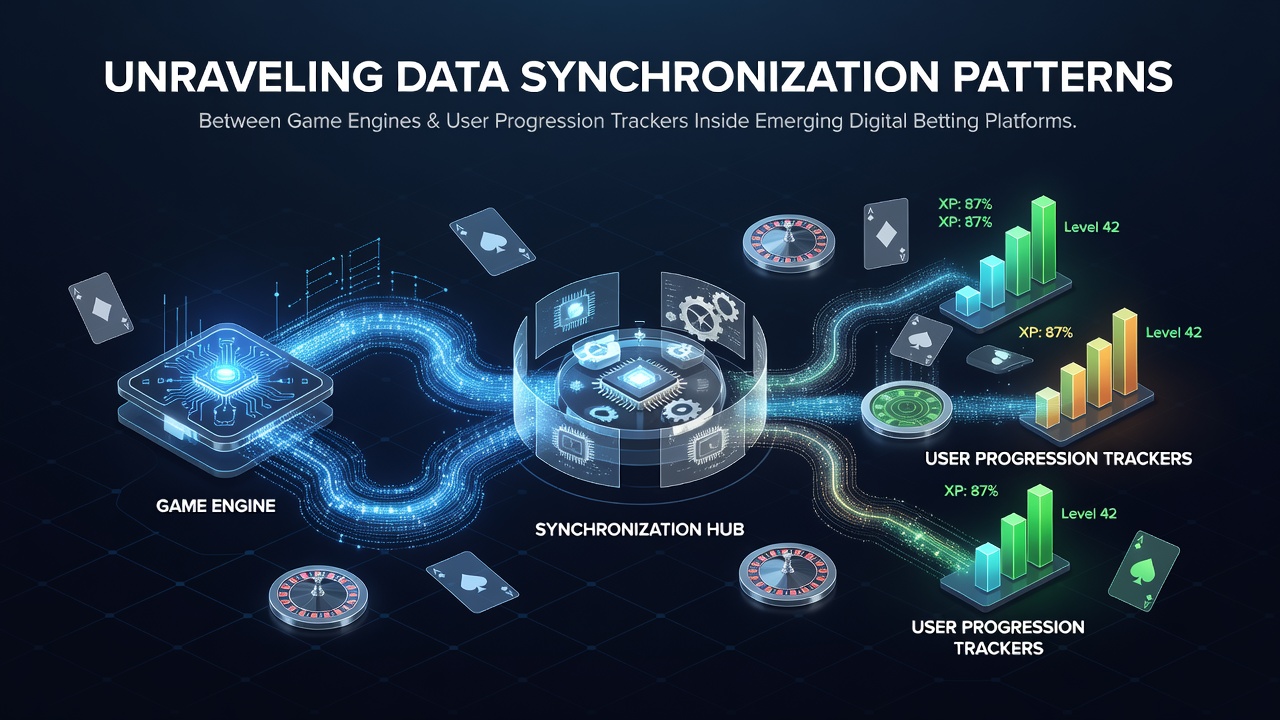
Digital betting platforms rely on tight coordination between game engines that render real-time outcomes and user progression trackers that log achievements, levels, and rewards. Data synchronization patterns emerge when these systems exchange information on bets placed, results generated, and status updates applied across mobile and desktop environments. Research from industry analysts shows that latency below 50 milliseconds often determines whether progression data stays accurate during live sessions, especially as platforms expand features in June 2026.
Game engines handle physics simulations, random number generation, and visual feedback while progression trackers maintain databases of player metrics such as win streaks, loyalty points, and tier advancements. Synchronization occurs through APIs that push event data from the engine to the tracker and pull updated profiles back into the game state. Observers note that common patterns include event-driven updates where each spin or hand triggers a packet containing outcome details, bet size, and timestamp, followed by reconciliation checks that verify consistency across distributed servers.
Core Synchronization Mechanisms
Event sourcing forms one primary pattern in which every action receives an immutable log entry that both systems reference during reconciliation. This approach lets platforms replay sequences after network interruptions, a frequent occurrence on mobile connections. Another pattern uses state machines where the game engine reports discrete states like "bet accepted" or "round resolved," and the tracker maps those states to progression milestones without storing full game logic. Data indicates that platforms adopting hybrid models, combining event logs with periodic full-state snapshots, reduce desync incidents by up to 30 percent compared with pure event-driven setups, according to technical reviews published by gaming technology firms.
Conflict resolution becomes necessary when simultaneous bets from multiple users update shared progression pools. Researchers have documented timestamp-based merging and priority queues that favor higher-tier accounts during peak traffic. In June 2026 several operators reported deploying edge nodes closer to users to shorten round-trip times for these merges, cutting average sync delays from 120 milliseconds to under 40 in tested regions.
Challenges in Real-Time Environments
Network variability creates the most persistent issues because mobile carriers introduce jitter that disrupts ordered message delivery. Progression trackers must therefore buffer incoming events and apply them in correct sequence, a process that can stall reward displays if buffers overflow. Studies conducted by university computer science departments reveal that platforms using predictive prefetching of user profiles onto local caches experience fewer visible delays, although this method raises storage costs on client devices.
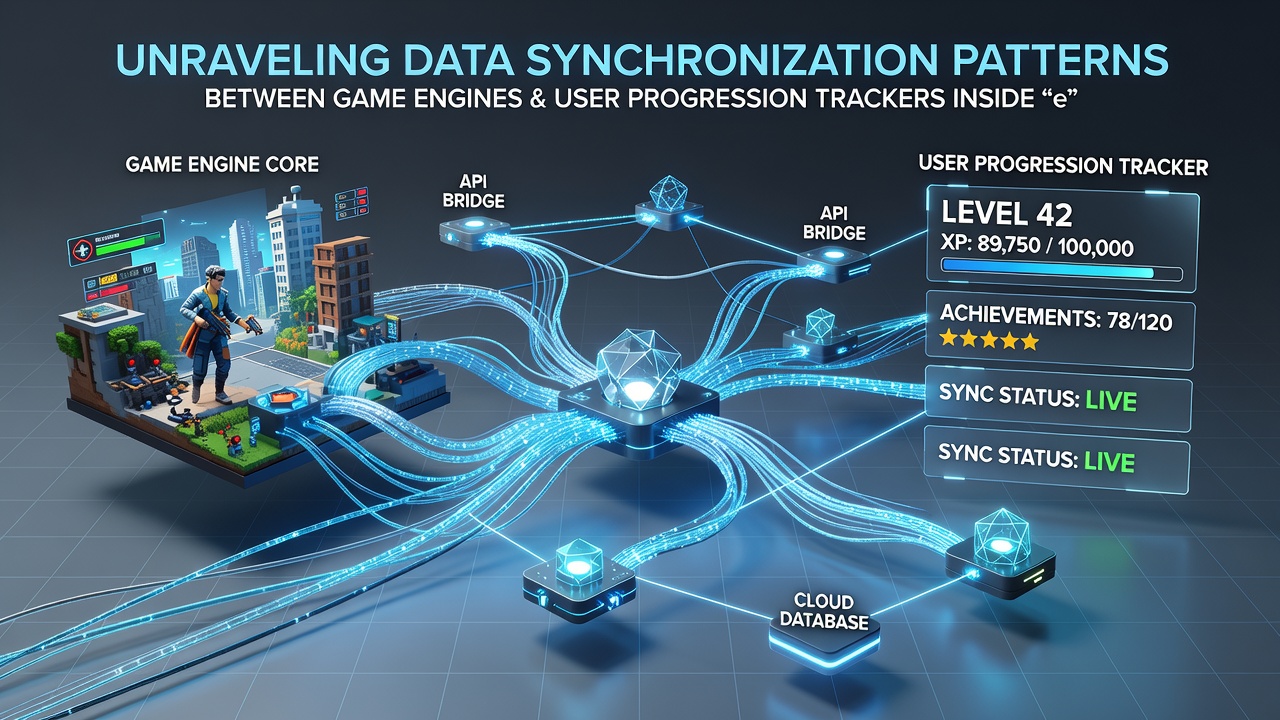
Security adds another layer because progression data carries financial value. Encryption of sync packets combined with integrity hashes prevents tampering, yet these measures increase payload size and processing overhead. Experts at data security conferences have presented findings that platforms employing mutual TLS authentication between engine instances and tracker services maintain audit trails suitable for regulatory review without measurable impact on gameplay speed.
Emerging Patterns and Platform Adaptations
Container orchestration tools now allow dynamic scaling of sync services during tournaments or promotional events when user counts spike. One documented case involved a European operator that shifted tracker workloads to additional microservices within seconds of detecting increased event volume, preserving sub-100-millisecond response times. Another pattern gaining traction involves eventual consistency models where minor discrepancies between engine and tracker resolve through background jobs rather than blocking user actions. Figures from technology vendors indicate that this method supports higher concurrency on resource-constrained mobile networks.
Integration with external analytics layers further complicates synchronization because third-party tools require sanitized copies of progression data for reporting. Platforms address this by publishing change-data-capture streams that decouple analytics from the primary sync path, reducing contention on core databases. As of June 2026, several North American operators have begun testing these streams to comply with varying state reporting requirements while maintaining internal progression accuracy.
Future Directions in Data Coordination
Developers continue exploring graph databases for modeling complex progression relationships that traditional relational systems handle less efficiently. Early implementations show promise in tracking multi-game loyalty chains where achievements in one title influence rewards in another. Meanwhile, machine learning models trained on historical sync logs predict likely conflict points and pre-allocate resources accordingly, a technique detailed in recent papers from academic gaming research groups.
Overall, synchronization patterns evolve alongside hardware improvements and regulatory expectations, with platforms balancing speed, accuracy, and compliance through layered architectures that separate game logic from progression logic while maintaining reliable data exchange channels.
Conclusion
Effective data synchronization between game engines and user progression trackers underpins reliable operation of digital betting platforms. Patterns such as event sourcing, state machine mapping, and conflict resolution through timestamps enable consistent user experiences across variable network conditions. Continued refinement of these mechanisms, supported by edge computing and predictive techniques, positions platforms to handle growing volumes of real-time interactions without compromising data integrity.