Resorts World Las Vegas Reports Significant Revenue and Profit Growth in First Quarter of 2026
Written by Clara Peters · May 28, 2026

Resorts World Las Vegas Reports Significant Revenue and Profit Growth in First Quarter of 2026
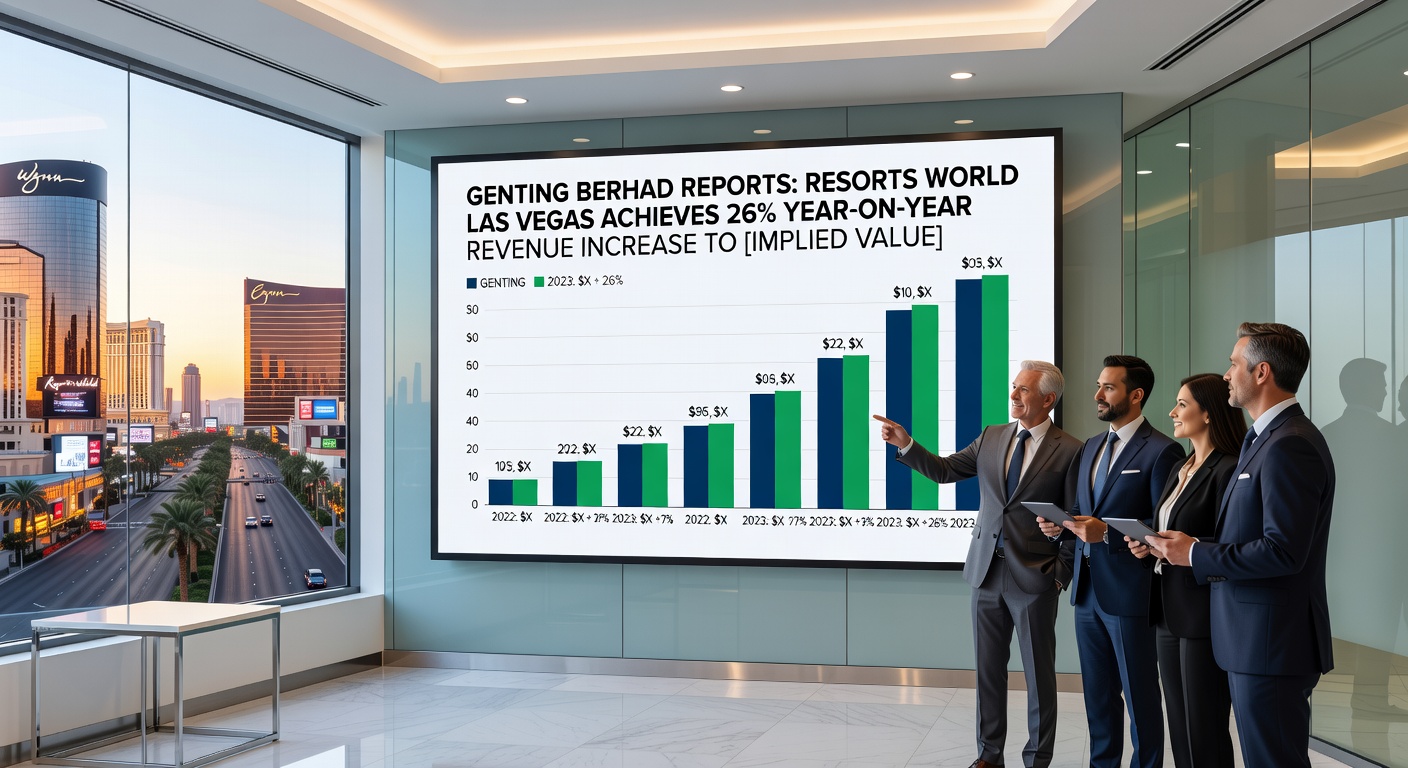
Data from Genting Berhad shows Resorts World Las Vegas posted a 26% year-on-year revenue increase to US$209 million for the first quarter of 2026, while the same period also delivered a 12% quarter-on-quarter gain and EBITDA climbed from US$10 million to US$50 million, and these figures reflect stronger convention bookings combined with improved hotel metrics and table performance.
Revenue Performance and Quarterly Comparisons
Revenue reached US$209 million during Q1 2026, representing both the year-over-year lift of 26% and the sequential increase of 12%, which demonstrates consistent momentum across multiple operating segments, while observers note that such growth patterns often emerge when demand for group events and premium gaming aligns with favorable hold percentages on the casino floor.
The property's financial report highlights how these revenue streams benefited from targeted improvements in high-end table play, where increased volume and better hold rates contributed directly to the topline expansion, and this combination of factors created a broader base for overall income rather than relying on any single category alone.
EBITDA Expansion and Margin Dynamics
EBITDA advanced sharply to US$50 million from the prior year's US$10 million level, illustrating how operational leverage translated revenue gains into substantially higher profitability, and the margin expansion occurred because fixed costs remained relatively stable while variable income from conventions, rooms, and gaming rose in tandem.
Those who've reviewed the segment results point out that the EBITDA jump signals effective cost management alongside revenue growth, yet the report stops short of attributing the entire improvement to any one initiative, and instead presents the outcome as the cumulative effect of several concurrent enhancements.
Key Operational Drivers Behind the Results
Stronger convention business formed one primary catalyst, drawing larger groups whose spending extended beyond meeting spaces into hotel stays and casino activity, while hotel occupancy climbed from 82.3% to 91.5% and average daily rates moved higher in parallel, producing a meaningful contribution to both revenue and EBITDA.
Improved high-end table play and favorable hold percentages added further support, as VIP activity generated elevated win amounts without corresponding spikes in promotional costs, and the combined effect of these elements created a balanced growth profile across the resort's diverse offerings rather than concentrating gains in gaming alone.
Analysts examining the Q1 data observe that occupancy and rate improvements typically reflect both stronger leisure demand and successful yield management strategies, whereas convention growth often correlates with broader economic conditions that encourage corporate and association events to return to major destinations like Las Vegas.
Context Within the Broader Recovery Path
By May 2026, the Q1 results position Resorts World Las Vegas on a clearer trajectory toward sustained performance, because the reported metrics demonstrate sequential progress that builds on earlier stabilization efforts, and the property continues to refine its mix of convention facilities, hotel inventory, and gaming options to capture evolving visitor patterns.
Figures released through Genting Berhad's reporting channels confirm these specific outcomes for the Resorts World Las Vegas segment, and the company presents the data without additional commentary on future quarters, leaving the numbers to speak for themselves regarding operational momentum achieved so far this year.
Conclusion
The Q1 2026 performance at Resorts World Las Vegas illustrates how coordinated advances in convention sales, hotel utilization, and premium table games can produce simultaneous lifts in revenue and EBITDA, and the reported statistics provide a factual snapshot of progress measured against both prior-year and prior-quarter benchmarks, while the underlying drivers remain tied to measurable changes in occupancy, rates, and play volume rather than external speculation.